Showing posts with label Manchester City Council. Show all posts

Wednesday, 21 July 2010

The Co-operative Quarter


Fundamentally, both the Council and the Co-op believe that a partnership approach will deliver this next great piece of urban development in the UK… through the pursuit of a common goal of high quality, socially inclusive, sustainable and economically successful urban regeneration… For the Council, the common goals reflect the regeneration objectives that will keep Manchester at the forefront of economic and social change.

The shiny new Co-op Quarter in the north of the city centre presents us with a microcosm of future Manchester – partnership-led regeneration to pioneer the low-carbon economy and spur new investment in our supposedly green and sustainable tomorrow. Problem is, that model is the same that’s been used for the past 20 years, and it hasn’t exactly brought about the perpetually promised prosperity and inclusion for the majority in Manchester.

Manchester City Council (MCC) recently handed over £20 million to the Co-operative Group for the redevelopment of the so-called ‘Northern Gateway’ into the city centre. The Co-op Quarter is set to cover 3.5 million square feet of land behind the M.E.N. Arena when it’s done, centred around a brand new head office on Miller Street. According to the Co-op the 15-storey HQ – which should be completed by 2012 at a cost of £100 million – will be “one of the most sustainable in Europe.”

The funding was endorsed in principle back in May 2008, and after the approval of the Co-op’s Strategic Regeneration Initiative (SRI) in May 2009 and subsequent consultation and planning permission, it was finally confirmed by the Council Executive last month.

The Council will “contribute £12m towards the development of public spaces which will be focused on creating a sense of place and world-class environment… by delivering the highest quality of public realm, improved pedestrian linkages and new high quality open spaces over the first phase and subsequent phases” while a cap of £8 million “will be allocated to a contribution towards infrastructure work, primarily focused on the narrowing of Miller Street.” The rest, expected to be in the region of £120-£150 million, will be put up by the Co-op.


People may argue that MCC could be putting taxpayer money in worse places. After all, the Co-op does ‘ethical investment’ doesn’t it? But maybe that’s not the right question.

The Co-op makes “profit for a purpose”, and partly due to what now seems like prudent investment policies after the global economic crisis, it’s been doing very well at that recently. While numerous banks, property developers and companies in similarly high-risk sectors have crumbled around it, the Co-op has been posting huge profits and growth. Last month it paid out record dividends of over £50 million to its shareholders, while sales last year were approaching £14 billion.

Why then does the Council think it needs taxpayers’ money, especially at a time when swingeing cuts are supposedly necessary everywhere else? Why doesn’t the Co-op pay for all of it? Profit’s “for a purpose” after all. Because the fact that it treats its staff a bit better than Wal-Mart and doesn’t shovel cash into the Burmese military junta doesn’t mean it doesn’t act like any other business, a huge and powerful one at that.

There were suggestions before the Co-op announced in late 2008 its intention to stay in the City Centre that the Group was considering moving out of town to either Oldham or Rochdale. MCC certainly didn’t want to lose one of the city’s most recognisable icons. In our post-industrial, globalised city, we’re told image counts for a lot when it comes to the all-encompassing end-game of attracting investors. The City Council recognises it has to “create world-class destinations and provide the conditions to attract further investment” and generate “the right conditions and attractive environment” for that to happen. If making the city nice for developers means throwing a load of money at the project then so be it.

The Co-op of course has deep roots in Manchester, as does the Labour Party, which has controlled the City Council it seems for time immemorial. The two are also intricately bound up with one another. This was obvious for all to see at the Executive meeting in May 2009. When the Co-op Quarter item came up councillors streamed out of the room, unable to participate in the discussion due to conflicts of interest regarding the project. The meeting only just had enough members remaining to proceed.


The Council was desperate to enter another ‘local partnership’. Public-private partnerships (PPP) have been the mainstay of local development policy for over 20 years now. In 1987, after another shocking national defeat to Thatcher’s Conservatives, the Labour Council, led by the current Blackley and Broughton MP Graham Stringer, became proto-New-Labour, “modernising” and giving up on the idea of ‘Municipal Socialism’ – though it wasn’t something they were exactly putting into practice. They embarked upon the brave new world of entrepreneurialism and PPP. It’s something they became very good at.

The new mantra was geared towards winning funding for projects embarked upon with private sector partners. Mega development schemes functioned this way throughout the ’90s and ’00s – think Hulme regeneration, the redevelopment of the city centre after the IRA bomb in 1996, the Commonwealth Games and New East Manchester. While the city elite celebrated the so-called urban renaissance as investment flooded in, the cold reality saw public money effectively pouring into the coffers of private developers.

Prosperity and jobs were always the promised outcomes of incoming capital, but what was really being fuelled were gentrification, a property boom and an increasingly exclusive city where enclaves of poverty and inequality persisted and grew. At the same time every bit of this city’s proud cultural past became bastardised and commodified, allowing the likes of Urban Splash’s Tom Bloxham (MBE) and Ian Simpson to become icons of the ostensibly ‘creative city’.

Meanwhile, as quangos and local partnerships blossomed – where lines between democratic decision-making and private profit-seeking were becoming increasingly blurred – those operating at the top of the public-private sphere became ever more powerful. Out of the ranks of the so-called ‘Manchester Mafia’ came the rise and rise of MCC Chief Executive Sir Howard Bernstein and new Council Leader Sir Richard Leese.

A couple of years before his death Tony Wilson was talking in Liverpool and said that their city was “fucked” because they didn’t have an enlightened despot like Manchester had Bernstein. For Urbis co-founder Justin O’Connor this “set a seal on the increasing moral and political bankruptcy of the post-rave urban growth coalition which had taken over Manchester post-1996.”

Of course Wilson meant this as a compliment to Sir Howard, but despite the former Factory Records man’s questionable judgement it highlighted the pre-eminence of the Council’s seemingly omnipresent chief exec. Returning to the Co-op Quarter we find none other than Bernstein on the Project Board, “comprising the City Council’s Chief Executive and senior representatives from the Co-op,” who “meet regularly to oversee the project, the regeneration objectives and to take forward priority actions.”


This supposedly “community-led” scheme works within the very narrow parameters of traditional PPP. The public consultation, which lasted less than a month, managed to elicit a staggering 14 responses.

The Co-op’s plans for a ‘green’ HQ do look genuinely exciting and innovative, and could act as a catalyst for wider changes needed in the city. But beyond that it’s the tired slogans of “creating identity” and “laying foundations for investments.” There’s more to urban sustainability than how energy and water are sourced and how much waste and carbon is produced each day.

So what exactly is meant by the Co-op’s corporate-speaking masterplan when it talks of “adding value for local communities?” Or the third contribution to the Community Strategy identified by the Council, the mind-blowingly vacuous phrase “individual and collective self esteem – mutual respect?”

The fourth, “Neighbourhoods of Choice,” is specifically about attracting people with ‘aspiration’ to the area, young people coming to live and work in the ‘knowledge economy’ while consuming the ‘service economy’. Others see it as code for yuppie flats. But it’s supposed to be a regeneration project, about creating opportunities for those who really need it in the surrounding and affected areas of Cheetham, Ancoats, Clayton and the City Centre.


Over the next 15-20 years it’s said that 15,000 jobs will potentially be created by the whole project. These estimates often fall way short, but even if it turns out true that’s only 750 to 1,000 jobs per year, without specifying what the jobs might be. In what almost seems like the Town Hall document equivalent of a Freudian slip, the reports don’t even refer to any impact on poverty reduction, one of the criteria such proposals are assessed by. The new Co-operative Academy set to open in Blackley in September is all well and good – well, if you believe in private interests, in this case a multi-billion pound corporate entity, setting curriculums.

There are chinks of light here and there. Take the SRI section titled “Jobs and community”, and under ‘Working together’ what could happen:

Renewable energy systems may generate surplus heat which could be connected to neighbourhood systems to address fuel poverty. The public open space could facilitate community markets, supported by urban farming and community allotment initiatives.

But it’s no more than a glimpse. In the end we see the same old policies, coming from the same old ‘leaders’. Bereft of ideas, they pursue that which has manifestly failed to address issues of poverty, inequality and exclusion in Manchester, or anywhere else for that matter. Maybe that’s exactly why they pursue them, or it’s the only way they know how to keep the unquestionable wheels of growth and profit turning.

Don’t let the shiny brochures fool you. Just because it’s the Co-op and it’s low-energy doesn’t mean this development is somehow different. In the end it’s just another market opportunity to create and exploit. That’s a system they’re all desperate to sustain, whatever the cost.

Words: Andy Lockhart
Pictures: Ian Pennington

Saturday, 19 June 2010

Bike Week 2010

Today sees the start of the Team Green Britain Bike Week 2010.


The simplest way to get involved is to cycle to and from your workplace at some point during the next nine days – a feat that won’t require any second thoughts to those who already do so. For those who don't, Cycle GM Commute Challenge has devised a little added incentive for those who might not usually consider it. But will the novelty last for the fair weather cyclists? And will there even be enough fair weather for the fair weather cyclists?

So far, the answer to the latter question, as I glance out of my window, is yes. The former poser is one with as much uncertainty as ever.


Manchester Friends of the Earth associates Love Your Bike are involved with Manchester City Council and the aforementioned Cycle GM for this year’s festivities, who’ve planned a schedule befitting some of the likely reactions to any suggestion of ditching the gas guzzler in favour of the cyclepaths.

On top of Cycle GM’s week-long challenge, the first brakes should be applied on arrival at Maintenance Monday; a worthwhile visit to those of you put off by the speed of your tyre’s deflation.


Now roadworthy, cycling to work should be a given. Bike to Work Day on Albert Square will find related activities, relevant for two-wheelers both new and experienced.

By the time the working week ends, and when cycling to work has whet your appetite for a pedal through the city, Bike Friday is offering (as is the case with every last Friday of the month) some ideas for where to go via their ‘led rides’ from Bury, Manchester, Salford and Trafford.


Finally, if after all that you don’t think you have the right helmet, high-vis jacket or ankle clips for your cycle chic, there’ll be some tips at the Bike Fabulous biking fashion showcase, on Saturday in the Arndale, where various catwalks (or catcycles?) will be punctuated by more on how to maintain your bike.

Words & Pictures: Ian Pennington

Thursday, 17 June 2010

The Natural Marketplace

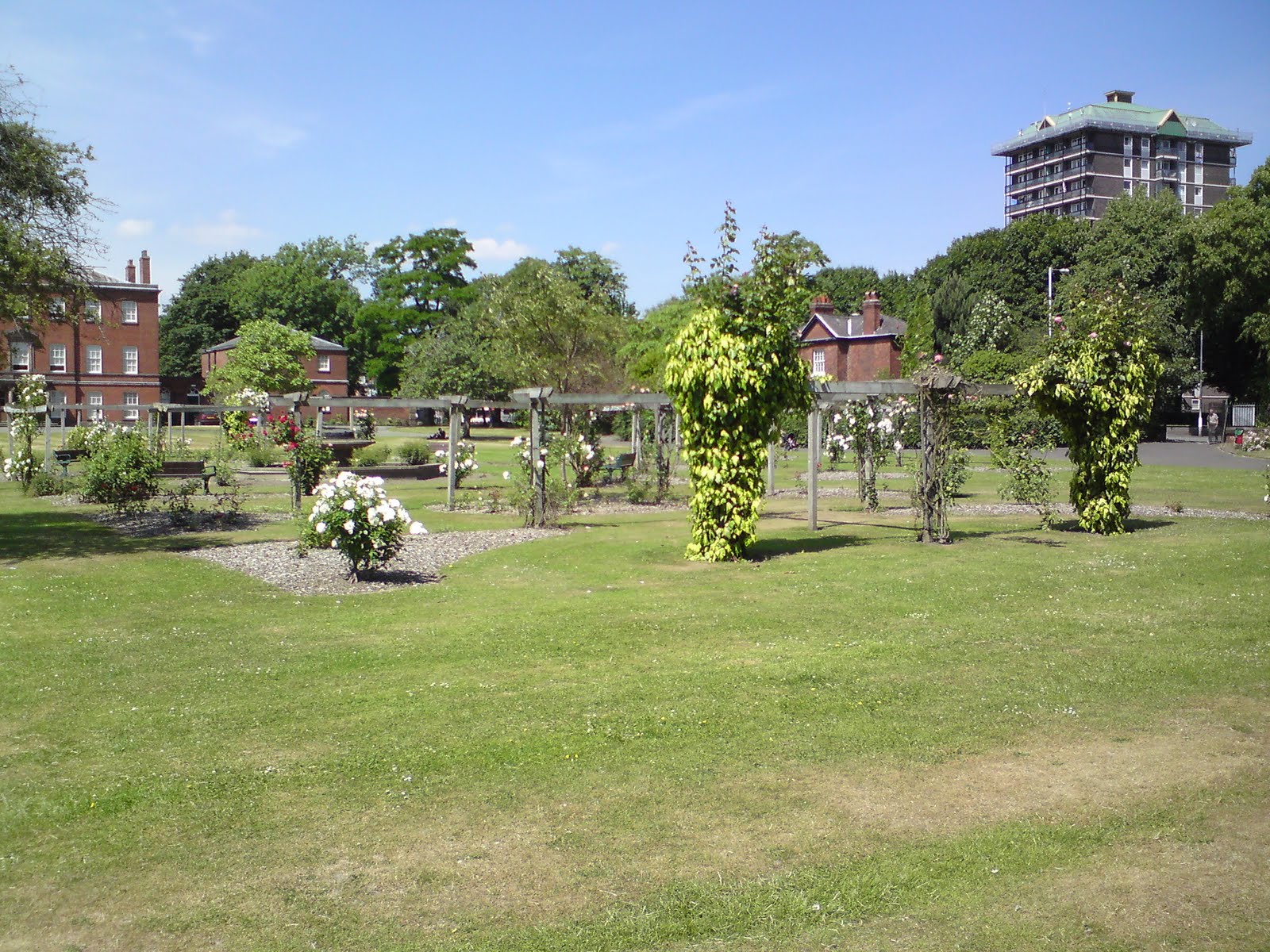
The parks and green spaces of Manchester seem to be gaining an increasingly prominent status within the city as a place where community and environmental action mingles with open space and good old fashioned peace and bloody quiet. But is it that easy? What pressures are put on them by their location and their function? And what is one park, Platt Fields Park in Fallowfield and Rusholme (now halfway through its centenary year), doing to try and thrive in this 21st Century where the twitter on your i-phone is more anticipated than the twitter of a sparrow (LOL)?


There has been a new project launched by the UK Government to try and place a monetary value on the Natural World, the UK National Ecosystem Assessment. Its aim, and I quote, is to be “the first analysis of the UK’s natural environment in terms of the benefits it provides to society and continuing economic prosperity” (http://uknea.unep-wcmc.org). Basically, they decide how much the Natural World is worth to us in pounds and pence. A piece of woodland? That'll be a fiver to you sir. A marshland with a peat underlayer that might act as a potential store for excess carbon? Fifty quid and a wink. Easy.


But the real issue here is the commodification of the Natural World around us. This comes in two ways – first, there is the placing of monetary value onto ecosystems and green spaces. This, according to some, will allow us to appreciate the true value of such things, and, actually, remove them from the marketplace by ascribing value designed to protect it. However, there is the reverse argument that it simply draws the Natural World into the marketplace, opening it up to be used as a 'thing' to be traded or exchanged based on its current value.


Second, is the idea that green spaces must compete with other resources for funding, preservation and a right to exist. They must prove their value for money by making repeated funding requests and proving what they do for the community, or be damned. There is no longer an idea of inherent usefulness in having green spaces.

Also, this has the effect of making us 'consumers' of green spaces to the extent that we expect things from them, as they are paid for by our money. We therefore expect value for that money. “This is our park, I paid for it with my ruddy council tax," etc, much the same argument we would use to justify bin collections every week or roads with no potholes.


So how does Platt Fields Park in particular survive and adapt to this paradigm shift in the thinking about green spaces?

In an interview with Anne Tucker from the Friends of Platt Fields Park, she explained that the park has many different interests to accommodate and to fend off. “Juggling different people’s needs from the park is the trickiest thing,” she says. “Problems are noise levels vs peace and quiet; dog lovers vs dog haters; fireworks (popular vs effects on wildlife); lake uses (fishing vs boating vs leave it alone); duck feeding vs excess of Canada geese; pathways v grass...” It seems that so many groups use these spaces that it is hard to get the balance right, as everyone has an expectation of what their local park should offer them. This expectation increases with the increased function and use value that parks must have to compete for limited Council resources.


Other interests want simply to change the use of the park altogether, or at least parts of it. “Over the years, there have been some attempts to encroach on the park by developers – most notably the gradual taking over of more of the park by Manchester City FC Sports Complex. There was a big fuss over this so another attempt in 2004 to make a temporary car park for hospital employees to park in and be bussed to the hospital while the MRI/St Mary’s were being rebuilt – it got cancelled with a huge campaign.”

On the up side though, Anne comments that, “nowadays if anyone wants anything like that, Manchester Leisure says ‘no’ immediately!”


When you go to Platt Fields Park, as I was lucky enough to do during the Easter Holidays, there certainly is a lot going on, and a lot of different communities using the park. Joggers, young families, groups of young people on the skate park, old men and their dogs, cyclists, people just going from A to B, and students, all seem to get something out of the park. There are cycling workshops, art days, guerilla gardening, community festivals and loads more stuff to try and get people involved in a productive, local way. And yet, all around, there are signs of the city still present, leaning over as if waiting for Nature to let its guard down. Student Accommodation looms up on one side, the MCFC Sports Complex on the other. The noise of traffic on Wilmslow Road is never far away.


All in all, despite the new pressures Platt Fields Park finds itself under, it tries its best to compete (yes, ‘compete’) for attention in our busy city where space is at a premium. I would have to say that its value lies not in its monetary worth, or its usefulness to various interested parties, but simply as an antidote to the dusty, glum routines we find ourselves swept along by if we don't keep our wits about us.

Words: Andy Rees
Pictures: Ian Pennington

Thursday, 6 May 2010

Council Peddling Stupid Laws.

For three years Manchester City Council have been persistently trying to legally restrict the rights of pedlars in the city. They were delighted then in early April when the Manchester City Council Bill squeezed through the Houses of Lords and Commons just before Parliament was dissolved. Pedlars have been fighting the legislation for years and are still fighting hard.


A pedlar, in the beautifully lyrical words of the 1871 Pedlars Act, is “any hawker, pedlar, petty chapman, tinker, caster of metals, mender of chairs or other person who without any horse or other beast bearing or drawing burden travels and trades on foot and goes from town to town or to other men's houses carrying to sell or exposing for sale any goods wares or merchandise or ...offering for sale his skill in handicraft.”

While they’re a massively diverse community, pedlars have their own cultural identity and traditions of which they’re fiercely proud. They’re generally self-employed, trying to supplement other income or retirement funds. Many started as a way out of unemployment or low-skilled work – something pretty important nowadays.

If you’re over 17 you can apply for a pedlar’s certificate from the local police station. It costs just £12.50, lasts a year and allows you to legally trade anywhere in the city, subject to certain conditions. Being able to set up cheaply and legitimately has proved invaluable for budding artists, craftspeople and other young entrepreneurs for the past 140 years – the founder of Marks and Spencer’s actually started as a simple pedlar!

The fight against the new legislation has been going on since its inception. Those opposing the Bill have won some major concessions, getting rid of some of the most draconian clauses. These included one which would have let council officers impose £300 fixed penalties on so-called ‘offenders’ and another which would practically restrict pedlars to being door-to-door salespeople.

There are four more bills to be heard by the Parliamentary Select Committee, but thanks to pedlars’ opposition a reported 50 councils have dropped their interest already.


But the Manchester City Council Act 2010 has still made it very hard for pedlars to sell their goods and services on the streets of the city. According to Altrincham-based trader David Murphy, there are now “conditions for a pedlar to work in Manchester's streets that will be difficult to apply, and will involve the council spending more money and take away the right of pedlars set out in the 1871 Act.”

The Act allows council and police officers to seize a pedlar’s goods and “any receptacle or equipment being used by that person” if they reckon an offence has been committed. An offence like not moving at least 200 metres every five minutes, or returning to the same place within 12 hours.

So why exactly has the Council – which loves to talk Manchester up as the ‘entrepreneurial city’ – been pushing so hard for such restrictive new powers?

Research by Durham University showed that councils across the land see “both certificated and uncertificated itinerant traders as a nuisance, and wrongly and pejoratively refer to both groups as simply ‘pedlars’. Enforcement activities tend to be similarly indiscriminate in targeting legal and illegal pedlars”. According to Professor Barry Hough, Professor of English Law at Bournemouth University, “There is without doubt a powerful and organised lobby against pedlars...[operating] both at national and local level.”

The head of the Local Government Association said of pedlars in 2008, “[they] operate in packs, sometimes linked to criminal gangs, obstructing passers by and using intimidating and threatening behaviour.” Seriously.

The academic research seemed to point to quite the opposite, finding the “vast majority” of people said their “experience with pedlars had been positive... No respondent indicated that they thought pedlars should be banned from trading in the streets.”

Not the view of Manchester’s political masters though. Acting Council Leader Jim Battle was elated back in September when John Alesbury – who had a pedlar’s certificate – was ordered to pay £700 for selling woolly hats and scarves from a cart on Market Street. He parroted the familiar mantra of “illegal street traders” undermining “legitimate traders who are struggling now more than ever before” and causing “obstructions on busy streets”.

In a press release on March 31st, Manchester’s director of neighbourhood services Vicky Rosin declared:
“We will [soon] be able to deal effectively with illegal street traders who sell shoddy, counterfeit and sometimes dangerous products, while causing major obstructions to emergency services on our busiest streets.”

She apparently isn’t aware that pedlars often buy from the same wholesalers as the High Street shops, or that they voluntarily carry products which are CE labelled – a certified mark of quality assurance – and carry manufacturer's names and addresses on them. Still, she continued:

“It will also mean hard working legitimate traders will no longer have their efforts undermined by people who think they can get away with turning up on our streets with the intent of deceiving Manchester people.”

Rosin also wished to “thank Manchester residents who have lent their support to this campaign”. I asked her who exactly these residents were – there’s no evidence of a consultation on the Council’s website, and judging by the Durham research it seemed unlikely there would be many. Perhaps it’s the High Street stores – those poor and persecuted “legitimate traders” – who are really so worried about the guy outside selling woolly hats?


I also asked her how much the pursuit of this law had cost the Council (and local taxpayers) on top of more than £100,000 paid to Clarkson of Sharpe Pritchard to argue – misleadingly as it turned out – to the Select Committee that pedlars legally had to trade while in “perpetual motion”. It’s probably quite a lot, but Ms Rosin declined to comment on either question, so we’re waiting on the results of a Freedom of Information request instead.

What we do know, thanks to information obtained by the Pedlars Information and Resource Centre, is that during the three years up to June 2009 Manchester City Council spent less than £10,000 on prosecuting 11 illegal street traders. That’s less than one tenth of what it cost to lose a legal argument in the Select Committee!

The battle will go on, probably in the courts. The Joint Committee on Human Rights has already recognised that the bills “may raise human rights issues which are worthy of further scrutiny”. One thing for sure is that the pedlars won’t give up any time soon – it’s their livelihoods which are being systematically trampled on.

For more on the UK’s pedlars and those campaigning against the new laws, check out www.pedlars.info

Words: Andy Lockhart
Pictures: Courtesy of www.pedlars.info